
Why India Is Protesting the Transgender Amendment Act 2026?
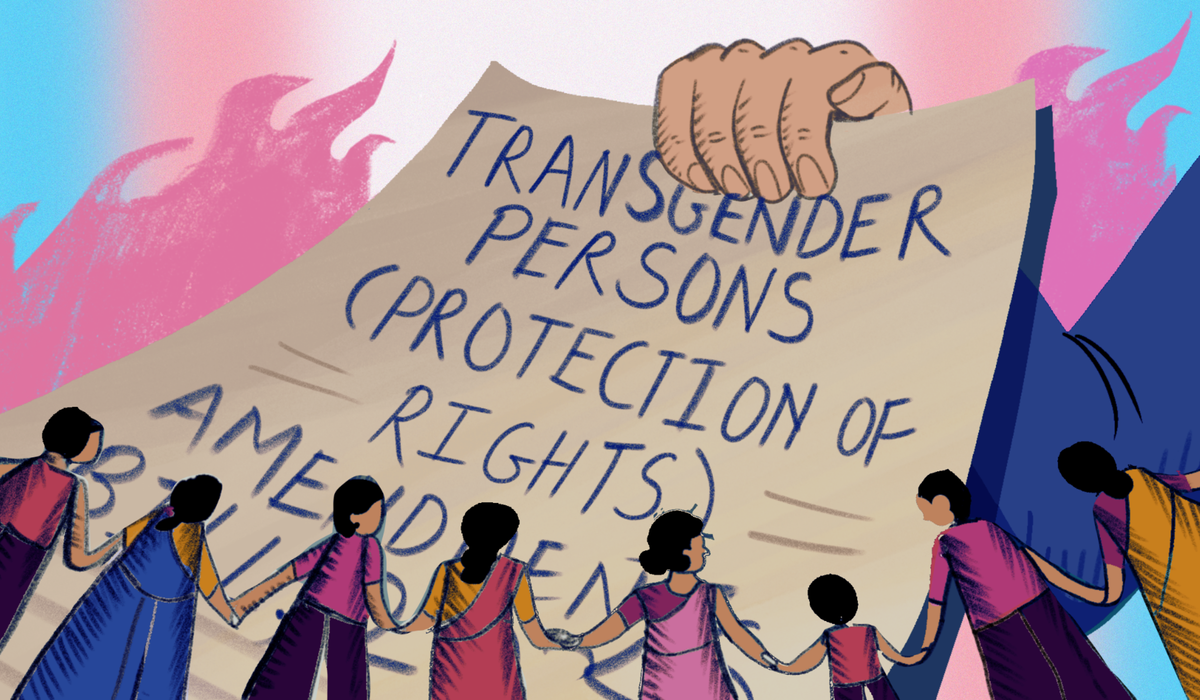
On March 30, 2026, President Droupadi Murmu put her signature on a law that driven thousands of Indians into the streets in protest. The Transgender Persons (Protection of Rights) Amendment Act, 2026, is now in force. And the debate over its real impact is far from settled.
A Little Background First
In 2014, India's Supreme Court delivered a historic judgment in the NALSA v. Union of India case. The court recognized transgender persons as a "third gender" and, more importantly, declared that every individual has the right to self-identify their own gender, without being forced to undergo surgery, medical tests, or get approval from any committee.
Building on this, Parliament passed the Transgender Persons (Protection of Rights) Act in 2019. That law was imperfect and itself faced criticism, but it did include a broad definition of who counts as transgender; covering trans men, trans women, genderqueer persons, and others, regardless of whether they had surgery.
The 2026 Amendment Act changes that framework significantly. And that is what has sparked nationwide outrage.
What Does the Amendment Actually Change?
The 2026 Amendment makes three major changes that have alarmed activists, lawyers, and members of the transgender community:
1. It shrinks the definition of "transgender." The original 2019 Act had a wide, inclusive definition. The Amendment replaces it with a narrow list of specific categories - mainly traditional socio-cultural groups like hijra, kinner, aravani, and jogta, as well as intersex individuals. Trans men, trans women who haven't had surgery, non-binary people, and gender-fluid individuals are no longer defined as 'Transgender' in the eyes of the law.
2. It removes self-identification. Under the new law, to be legally recognized as transgender, and to change one's gender on government documents - a person must undergo gender-affirming surgery. That surgery itself can only happen after approval from a district-level medical board. In other words, the state now gets to decide your gender, not you.
3. It introduces a new criminal offence. The Amendment makes it a punishable offence, potentially up to life imprisonment, for "coercing or alluring" someone into being transgender. Critics point out that this vague, sweeping language could be used to criminalize families, teachers, support groups, or anyone who helps a transgender person live authentically.
"Identity is no longer treated as something inherent, but as something to be checked, certified, and controlled." — Aakar Patel, Amnesty International India
Why Are People Protesting?
The protests reflect both legal objections and deep personal pain. Here are the core reasons:
It contradicts the Supreme Court Judgement. The 2014 NALSA judgment explicitly said that legal recognition of gender cannot depend on surgery or medical examination. The 2026 Amendment does exactly that. Lawyers and rights groups argue that this makes the law unconstitutional on its face, a violation of the right to dignity, privacy, and equality guaranteed under Articles 14, 19, and 21 of the Constitution.
Surgery is not accessible for most. Gender-affirming surgery is expensive, physically demanding, and emotionally significant. Requiring it as a condition for legal identity is, in practice, a barrier that most transgender people, especially those from poor or rural backgrounds, simply cannot clear. The law effectively tells the majority of trans people: you don't legally exist.
The bill was rushed without consultation. The Amendment was introduced on March 13, 2026, and cleared both houses of Parliament in under two weeks. It was passed without any meaningful consultation with the transgender community. Even the National Council for Transgender Persons, a statutory body set up under the 2019 Act specifically to advise the government on such matters, was not consulted. Two of its members resigned in protest after the bill passed, calling it a step backward for their fundamental rights.
The new criminal clause is dangerous. The offence of "coercing or alluring" someone to be transgender is seen as deliberately vague and potentially weaponizable. Activists say it echoes old colonial-era laws that were used to criminalise transgender persons and those associated with them. Support groups, NGOs, even parents who support their transgender children, could theoretically be targeted.
It ignores regional and cultural diversity. India has a rich variety of gender-diverse identities across its regions. For example, in Tamil Nadu, the terms thirunangai and thirunambi are commonly used for trans women and trans men. None of these regional identities are recognised in the Amendment's narrow list. Activists from the Northeast also pointed out that the bill completely ignores their region-specific gender identities and lived realities.
The Government's Defence
The government has argued that the Amendment is simply meant to bring precision and clarity to the 2019 Act. It says the original law was too broad, creating implementation difficulties. Officials stated in Parliament that the law is meant to protect those who face severe discrimination due to biological reasons, not every person with a different gender identity or sexual orientation.
The government maintains that the revised definition is more targeted and workable. It does not accept the criticism that the bill rolls back rights.
What Happens Next?
The Act is now in force. President Droupadi Murmu signed it on March 30, 2026, despite over 140 lawyers, law students, and activists writing to her urging her not to. The appeals were ignored. The Ministry of Social Justice and Empowerment will soon issue rules telling local authorities how to implement the new medical screening process.
Legal challenges before the Supreme Court are expected imminently. The constitutional questions are serious, the Act sits in direct conflict with the 2014 NALSA judgment, which the Supreme Court itself laid down. Whether the judiciary steps in to undo what Parliament has done remains to be seen.
This is not the first time India's transgender community has had to fight a law designed in their name. They pushed back in 2016. They pushed back in 2018. Each time, they won something. They say they'll fight again, this time in court.
Legal Blog on "Transgender Persons (Protection of Rights) Amendment Act, 2026."
Related News
- Transgender Persons Amendment Act, 2026 Receives Presidential Assent.
- Self-Identification is a Right, Not a Concession: Rajasthan High Court.
- Supreme Court Panel Urges Centre to Withdraw Transgender Amendment Bill
- Lok Sabha Passes Transgender Persons Amendment Bill, 2026 Amid Opposition Walkout
Read More News at legalwiki.co
Join our WhatsApp group for more updates!
![Internship Opportunity at NITI Aayog, 2026 [6 Weeks, New Delhi] – Apply by April 10!](/content/images/size/w600/2026/04/niti-aayog-logo-vector.png)
![Legal Internship at NALSAR [Disability Studies & Legal Philosophy] – Apply Now!](/content/images/size/w600/2026/04/NALSAR.webp)

![Legal Consultant at Ministry of External Affairs, New Delhi [5+ Yrs Exp; Salary ₹10 LPA] - Apply by April 6!](/content/images/size/w600/2026/04/Ministry-of-External-Affairs.jpg.webp)