
Regulating Fashion Technology: Data Privacy, Consumer Protection & E-Commerce Laws
Author: Manan Grover, 2nd year Law Student, Maharaja Surajmal Institute, Janakpuri
Fashion has always been about expressing oneself, making retail therapy an important concept in modern society.
Enter, digital technology, or in this case, the combination of fashion and technology. This made even the most uninterested shopper indulge in some impulse buying or at least ‘window’ shopping, often intrigued by the features on various shopping apps.
The comfort and ease with which shopping can be accomplished has been a huge plus.
Future Scenario
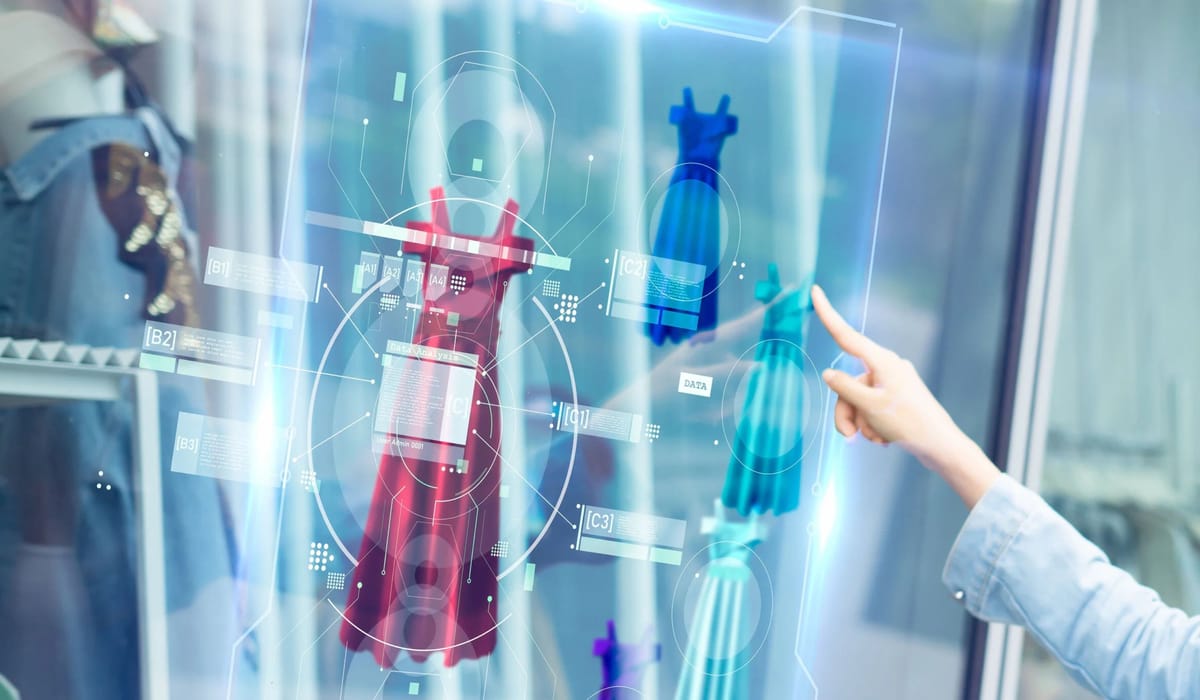
- No more waiting in queues for fitting room trials as augmented reality mirrors and tools like virtual try-ons show you how you will look in an outfit from within the comfort of your room!
- Testing that lipstick/ foundation shade or try on Jewellery without leaving your home? Virtual make-up and Jewellery try-ons have already been started.
- In fact, skincare brands have also started offering artificial intelligence (“AI”) based skin analysis that diagnoses skin conditions, providing a tailored skin care routine for your skin type.
From smart outfits with built in sensors that measure vital signs such as temperature, respiration, and heart rate, to smart glasses embedded with cameras that let you record videos, technology is making fashion kewl.
The intersection of fashion and technology has opened doors to a whole new world of possibilities. While these innovations have certainly enhanced our shopping experiences, they have also brought about a host of legal issues to the fore.
Key Issues of Fashion Technology
(a) Intellectual Property
- Patents
The race to protect IP in the fashion-tech realm is evident from the surge in the number of patent filings made to safeguard innovation, e.g., Coty, an international beauty company, has filed for a patent for its virtual make-up try on technology that shows how makeup will look under different lighting conditions (i.e., daylight, night, etc.); L’Oreal has filed a patent for its digital makeup artist app, which examines images of users and provides personalised skincare and makeup recommendations.
Patents are territorial, meaning they offer protection only in those territories where they have been granted, implying that brands need to carefully evaluate jurisdictions for patent exploitation and protection, more so, as issues of patent infringement can get tricky sans patent protection.
In India, “computer programmes per se” or “algorithms” are not patentable. However, an invention involving a computer-based method, is not automatically excluded from being patentable. Method claims in computer programmes may be patentable if it involves a technical advancement and provides technical solution to a technical problem and has an improved technical effect on the underlying software.
- Copyright
Copyrights exist in all literary, artistic, musical and dramatic works, including in cinematographic films, sound recordings and images. Intersection of copyright law and tech raises some interesting questions, such as who is the author/ owner of the copyright in a virtually created image, AI models (avatars) generated during or for a try-on?
If the purpose of a platform is to allow users to virtually try-on clothing or makeup of third-party brands, the platform will likely need licences for use of the brand name/ product name from such third-party brands to avoid trademark infringement or brand dilution related issues.
Platforms may also use open-source software for developing or integrating technologies (such as AI). However, it is critical for such platforms to carefully review the terms of such open-source software licences for any restrictions/ limitations on the commercial use, or integration with other products.
(b) Data Protection
When users engage with fashion tech, they entrust platforms (and companies) with their personal data, including their name, phone number, body and health related data and facial features, among other identifiers.
In India, the principles of data protection under the applicable laws [including the Information Technology (Reasonable security practices and procedures and sensitive personal data or information) Rules, 2011, as well as the upcoming Digital Personal Data Protection Act, 2023 “DPDPA”] are based on user consent.
Accordingly, body corporates are only permitted to process personal data after obtaining express user consent. Additionally, such users have to be informed about inter alia the type of personal data being collected, the purpose for such collection and processing through comprehensive privacy policies, published in compliance with the requirements under law.
As privacy regimes become robust and implementation becomes strict, it will be crucial for fashion tech platforms to update their policies and practices to align with law. Companies may also need to prepare for litigation and activism as awareness about user rights and data privacy grows. E.g., Estee Lauder and its multiple makeup brands, including Bobby Brown, Smashbox and Too Faced, steered clear of a class action suit filed by some customers under the Illinois biometric privacy law. The plaintiffs claimed that the company had failed to inform that their biometric data would be collected when they virtually tried-on cosmetics or submitted photographs on the platform.
However, the US court dismissed the case, holding that the plaintiffs were unable to prove that the company could connect the facial scans collected by the virtual try-on software to actual customer identities.
(c) Consumer Protection
While fashion-tech platforms offer convenience, virtual experiences offered by such platforms should also accurately reflect the real-life product. Any misleading claims, mis-advertising, or unfair practices, including dark patterns, with respect to a product or service could potentially lead to consumer dissatisfaction and consumer-rights related implications under law, including the Consumer Protection Act, 2019, the Guidelines for Prevention of Misleading Advertisements and Endorsements for Misleading Advertisements, 2022, and the Guidelines for Prevention and Regulation of Dark Patterns, 2023.
To mitigate such risks, platforms should build-in clear, comprehensive and appropriate disclaimers in their terms and policies to help set realistic expectations in the minds of users, ensuring that they are aware of the potential disparities between real products and their virtual representations.
Further, consumer laws also require e-commerce entities to establish a consumer grievance redressal mechanism, clearly publish the contact details of the grievance officer and customer care on its platform, and provide accurate information regarding refund, delivery, exchange, warranty, guarantee, etc., to users. These are critical from compliance as well as customer trust perspective.
(d) Contracts
As companies collaborate to develop and integrate technologies (such as AI) in fashion-driven platforms, negotiation and drafting of contracts require careful consideration. From licensing agreements to partnership contracts between fashion brands and tech companies, contracts must clearly address issues including those related to revenue split, IP ownership, liability and performance obligations, among others.
Such contracts should, inter alia, delineate clear instances and grounds for termination that can be availed by respective parties, while specifying the consequences of termination. Similarly, indemnity clauses are vital and should outline the scope of indemnification, along with any limitations or exclusions, fostering clarity for all involved parties. These may become particularly important in cases of data breach (which could result in penalties in various jurisdictions).
A well-crafted dispute resolution clause is equally important to ensure conflicts are addressed systematically. Given that companies transacting may belong to different geographical territories, clauses pertaining to dispute resolution process, governing law, and jurisdiction emerge as critical clauses of a well-crafted agreement.
Conclusion
Fashion-tech has undeniably opened the doors to exciting possibilities for retail industry. While these are some of the foreseeable legal issues, there will be a lot more in the coming days, especially as experiences become more real and life-like. These could arise on account of misuse of technology, user-harm in a virtual world, enforcement challenges in cases of unlawful acts, especially when the counter party is anonymised or untraceable, user data misuse (including user related frauds), among others.
The Government is also cognizant of this fact and hence shaping new laws for the digital world. India will soon have the Digital India Act which will, inter alia, deal with the whole ecosystem of technology, replacing India’s 22-year-old Information Technology Act, 2000.
Focus on legal issues may not be enough, nor can legal issues be isolated from social issues. Careful consideration of social and non-legal concerns in fashion-tech is also equally important from a sectoral growth perspective.
As demand for fast fashion surges, sustainability in fashion, and issues such as re-cycling will also take centre stage. A 360-degree approach to strike a balance between law, business, accountability and sustainability will be needed for progressive growth of India’s fashion-tech industry.
Keep Learning!
Join our WhatsApp group for more updates!
Visit Legalwiki.co for more legal updates.
![FSSAI Internship 2026 [Stipend Rs. 10K, New Delhi] – Apply by March 27!](/content/images/size/w600/2026/03/1740116165172.jpeg)


![Senior Professional (Patent Paralegal & Docketing) at Khurana & Khurana [5–10 Yrs Exp, Greater Noida] – Apply Now!](/content/images/size/w600/2026/03/khurana_and_khurana_logo.jpeg)