Balancing Free Speech and Harmful Content on Social Media
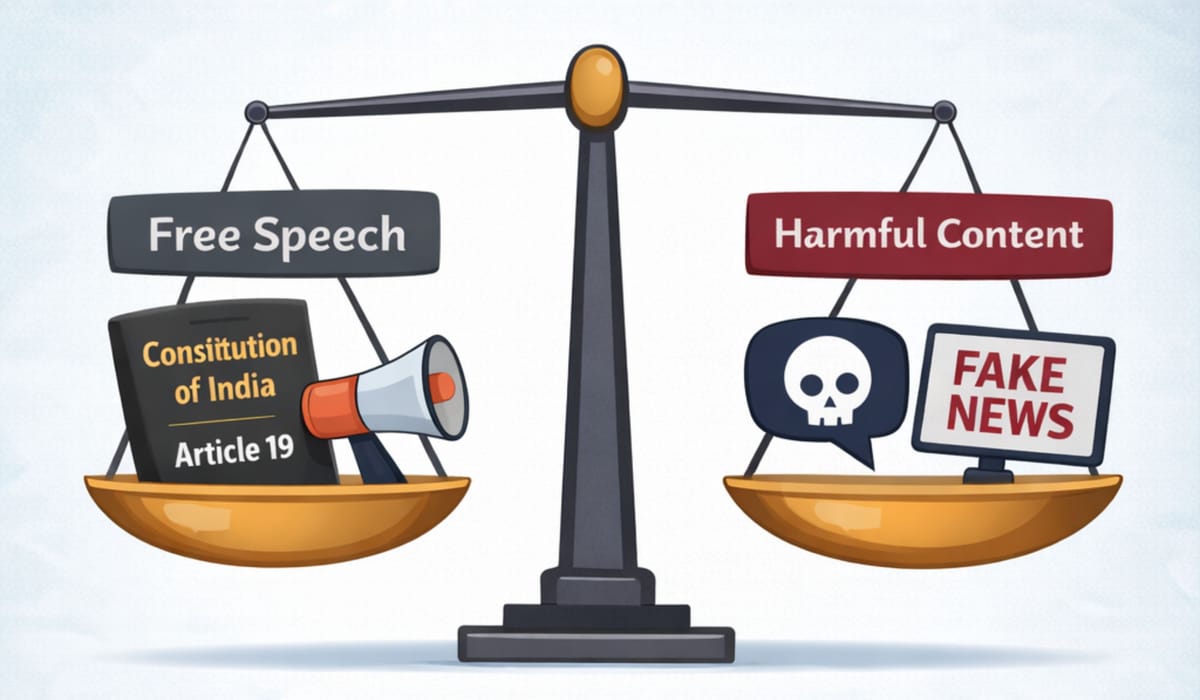
In today’s world, social media like Facebook, Instagram, X (formerly Twitter), and YouTube are major places where people talk, share ideas, and learn about the world. These platforms give everyone a voice, which is huge. But with this freedom comes a serious problem: sometimes what people post can be harmful, hateful, or dangerous. So how do we balance free speech with the need to stop harmful content from spreading?
Free Speech in the Constitution of India
In India, freedom of speech and expression is a fundamental right guaranteed by Article 19(1)(a) of the Constitution of India. This right lets citizens express opinions, share information, and engage in public debate.
However, this freedom is not absolute. Article 19(2) says the government can place reasonable restrictions on speech in the interests of:
- public order
- national security
- decency or morality
- defamation
- friendly relations with other states
- incitement to an offence.
This means that while you can speak freely, you cannot use speech to harm others, incite violence, or spread dangerous lies.
How India Regulates Online Content
The main law governing online speech in India is the Information Technology Act, 2000 (IT Act). This law sets rules for how content must be handled online.
1. Intermediary Liability (Safe Harbour) - Section 79
Section 79 gives online platforms (called “intermediaries”) like social media sites some protection. They won’t be held responsible for user posts if they follow certain rules, like removing content when told by authorities.
However, the interpretation of this section has changed over time. The Supreme Court in Shreya Singhal v. Union of India (2015) struck down Section 66A of the IT Act. It was a law that punished “offensive messages” because it was too vague and violated free speech under Article 19(1)(a).
Section 69A
Section 69A allows the government to order the blocking or removal of online content if it threatens national security, public order, or friendly relations with other countries.
For example, in July 2025, the Indian government reportedly ordered X to block over 2,000 accounts under Section 69A - including news accounts , though they were restored later after confusion over the order. Reuters
3. IT Rules: Intermediary Guidelines & Digital Media Ethics Code, 2021
Under the IT Act, the IT Rules set more detailed responsibilities for platforms. They require:
- due diligence by platforms to remove unlawful content,
- grievance officers to handle complaints,
- faster removal of harmful posts when directed.
In 2025, draft amendments also proposed rules to tackle deepfakes and AI‑generated harmful content. These aim to label or remove fake and misleading AI material. The Economic Times
However, these rules also raise concerns about over‑broad removal and censorship, because platforms may remove content just to avoid penalties. Critics argue that vague definitions may lead to lawful speech being taken down.
Real Life Examples in India
Here are some notable real‑world situations that show the tension between free speech and harmful content:
Government vs. Platform: X and Content Removal
In early 2026, the Indian government directed X to remove obscene, indecent, and unlawful content, especially that generated by AI tools. Authorities warned that failing to comply could lead to legal consequences. The Times of India
This shows how regulators are demanding more accountability from social media platforms to control harmful content.
Political Speech Protected by Courts
In September 2025, the Telangana High Court ruled that police should not file routine cases against people for harsh or critical posts about the government, unless they actually incite violence or threaten public order by reinforcing constitutional protection for political expression under Article 19(1)(a). The Times of India
This case highlights how Indian courts protect political speech online.
Influencers and Responsible Posting
In October 2025, the Delhi High Court said content creators must be careful online, especially if they have large followings, because speech that insults or humiliates can violate the dignity of others. This ruling referenced free speech and reasonable restrictions under the Constitution. The Times of India
Deepfake Regulation
With the rise of AI, India is moving to curb harmful deepfakes like fake videos or images that can mislead people or harm reputations. The government’s draft rules target malicious AI content and aim to identify creators responsible for harm. The Economic Times
Why This Balance Matters
Free speech is essential for democracy, debate, and innovation. But unchecked harmful content can spread hate and violence, misinform people, damage reputations and trust, and can threaten social harmony.
Laws like the IT Act and the Constitution try to strike a balance by protecting speech while setting reasonable limits. The challenge is to design rules that stop harmful content without making speech meaningless or chilling honest expression.
Challenges Ahead
Even well‑intended laws can be hard to put into practice. Words like “unlawful” or “obscene” are often unclear, so social media platforms sometimes take down posts too quickly just to avoid trouble. The government’s new Sahyog rules, which use a centralised system to remove content, can also make it less clear why certain posts are blocked, raising concerns about censorship. At the same time, platforms sometimes feel that strict rules limit free speech, so they challenge them in court.
Conclusion: Free Speech with Responsibility
Social media gives us amazing ways to connect and share ideas. But when posts spread hate, false information, or encourage violence, they can harm people and society. India’s laws from Article 19 of the Constitution to the IT Act and updated rules try to balance free speech with public safety. The goal isn’t to stop people from speaking, but to make sure their words don’t hurt others. When users act responsibly, platforms follow rules carefully, and laws are fair, social media can be a place where people share freely and safely.
Keep Learning!
Join our WhatsApp group for more updates!
Visit Legalwiki.co for more legal updates.
![Long-Term Legal Internship at Aditya Birla Sun Life Insurance [ Mumbai, 12 Month] - Apply Now!](/content/images/size/w600/2026/03/delete1.jpg)
![Internship Opportunity at The Office of Hon’ble Mr. Justice N. Kotiswar Singh [Supreme Court of India] – Apply Now!](/content/images/size/w600/2026/03/copy-19.png)